

WordPress Client Portals for Onboarding, Files, and Approvals: Replace the SaaS Stack
Consolidate client onboarding, private files, and approvals into one branded WordPress portal – and retire the fragmented SaaS stack.
Enterprise WordPress Client Portals: RBAC Architecture and Schema for Generative Engine Optimization
How enterprise WordPress portals combine RBAC with public schema graphs so search and AI engines cite the right entities—not private data.
Enterprise WordPress Infrastructure: Domain Isolation & Performance
As enterprise organizations scale their digital footprints, monolithic WordPress deployments often encounter operational friction. Running a high-traffic marketing engine, a resource-heavy client portal, and dynamic custom post type (CPT) databases on a single shared origin server introduces severe performance degradation, shared memory locks, and amplified security risks.
Enterprise WordPress Security Architecture & WAF Hardening
For enterprise engineering teams, security remains the primary hesitation when deploying WordPress at scale. The open-source nature of the platform makes it a frequent target, but the vulnerability is rarely the core software itself. Over 98% of security compromises in the ecosystem stem from unvetted third-party plugins, weak database access controls, and unhardened REST API endpoints.
Mastering INP for Enterprise WordPress: Solving Main-Thread Bottlenecks for Sub-Second Execution
Google’s transition from First Input Delay (FID) to Interaction to Next Paint (INP) marked a fundamental shift in how web performance is measured. Where FID only measured the initial delay when a user first attempted to interact with a page, INP evaluates overall page responsiveness by measuring the latency of all user interactions—clicks, taps, and keyboard inputs—throughout the entire...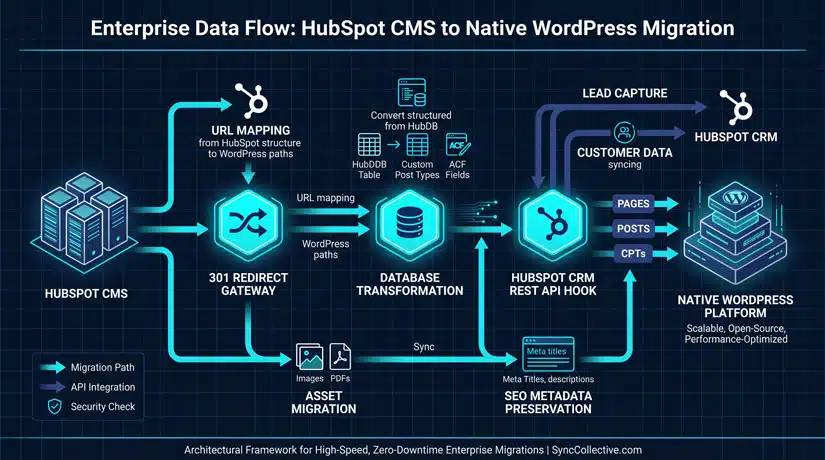
Migrating Enterprise HubSpot CMS to WordPress: Preserving SEO Equity, Database Schemas, and Custom Workflows
As enterprise marketing and engineering teams scale, closed content management systems like HubSpot CMS Hub frequently shift from a convenient all-in-one platform to an expensive technical bottleneck. High monthly portal licensing, restricted server access, and proprietary HubL markup language restrict your ability to execute custom database architectures and optimize server-side execution.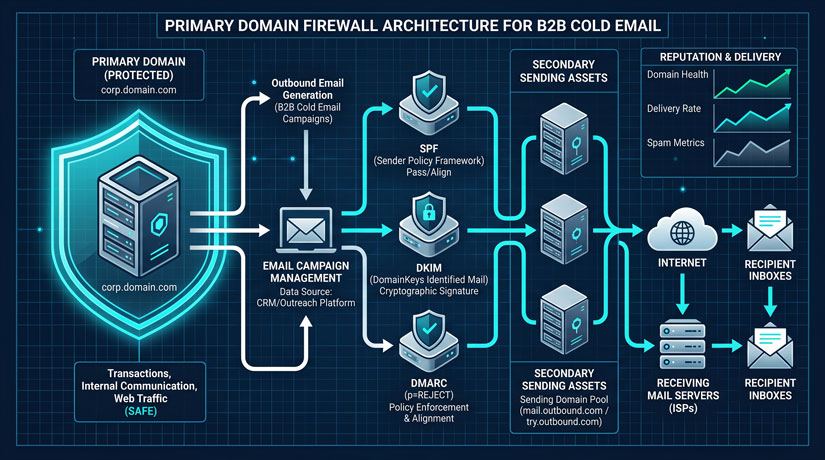
Secondary Domain Isolation: Building Firewall Architecture for B2B Email Outreach
An enterprise outbound email infrastructure is only as strong as its technical isolation model. Routing high-volume B2B outreach through your primary corporate domain exposes your core business operations, transactional communications, and brand reputation to severe deliverability risks.
WordPress Database Schema & CPT Optimization: How to Prevent Scale Bloat
As enterprise digital ecosystems scale, a silent performance killer often lurks beneath the surface: database bloat.
Headless WordPress vs. Native Gutenberg: Which Architecture Drives Better Core Web Vitals and AEO?
As enterprise organizations scale their digital presence, executive teams frequently reach a critical architectural fork in the road: should you dismantle your traditional setup in favor of Headless WordPress, or optimize built-in capabilities using Native Gutenberg?