
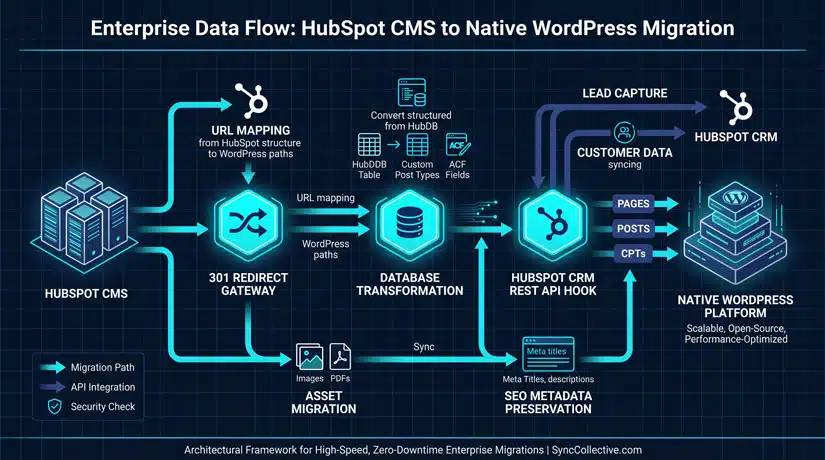
Migrating Enterprise HubSpot CMS to WordPress: Preserving SEO Equity, Database Schemas, and Custom Workflows
As enterprise marketing and engineering teams scale, closed content management systems like HubSpot CMS Hub frequently shift from a convenient all-in-one platform to an expensive technical bottleneck. High monthly portal licensing, restricted server access, and proprietary HubL markup language restrict your ability to execute custom database architectures and optimize server-side execution.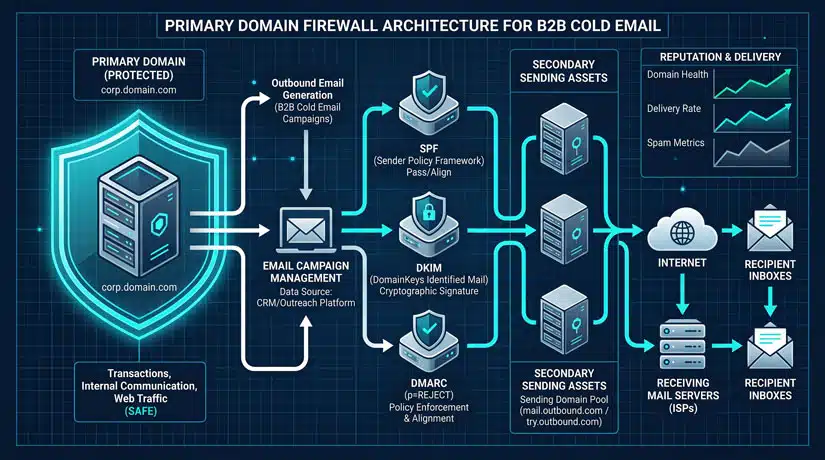
Secondary Domain Isolation: Building Firewall Architecture for B2B Email Outreach
An enterprise outbound email infrastructure is only as strong as its technical isolation model. Routing high-volume B2B outreach through your primary corporate domain exposes your core business operations, transactional communications, and brand reputation to severe deliverability risks.
WordPress Database Schema & CPT Optimization: How to Prevent Scale Bloat
As enterprise digital ecosystems scale, a silent performance killer often lurks beneath the surface: database bloat.
Headless WordPress vs. Native Gutenberg: Which Architecture Drives Better Core Web Vitals and AEO?
As enterprise organizations scale their digital presence, executive teams frequently reach a critical architectural fork in the road: should you dismantle your traditional setup in favor of Headless WordPress, or optimize built-in capabilities using Native Gutenberg?
Migrate Wix to WordPress Without Losing SEO: A Technical Guide
For many growing businesses, DIY website builders like Wix, Squarespace, or Shopify are fantastic launching pads. They offer quick setup, low initial costs, and drag-and-drop simplicity.
Why Off-the-Shelf SaaS Tools Limit Business Growth (And What to Do)
As a business grows, its operational needs become more complex. To handle client onboarding, document collection, custom quoting, or internal reporting, companies typically resort to stacking third-party SaaS (Software as a Service) apps.
AEO & Domains: How AI Search Engines Choose Which Brands to Trust
The way consumers find information online is undergoing a massive shift. While traditional search engines present a list of blue links, Answer Engines—powered by LLMs like ChatGPT, Perplexity, Gemini, and SearchGPT—synthesize direct answers, citing only a select few authoritative sources.