
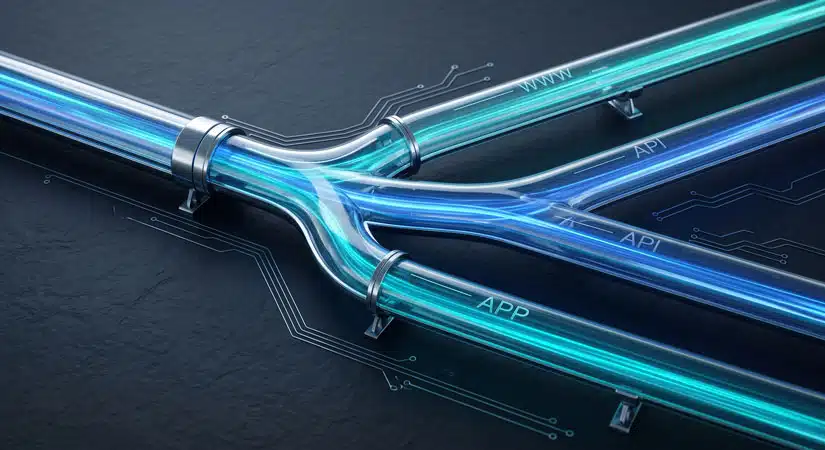
As enterprise organizations scale their digital footprints, monolithic WordPress deployments often encounter operational friction. Running a high-traffic marketing engine, a resource-heavy client portal, and dynamic custom post type (CPT) databases on a single shared origin server introduces severe performance degradation, shared memory locks, and amplified security risks.
Modern B2B web applications require a decoupled, highly available Enterprise WordPress Infrastructure Architecture. By leveraging domain isolation, containerization, and edge-level request routing, enterprise engineering teams can isolate failure domains while maintaining unified content management workflows.
1. The Mechanics of Domain and Workload Isolation
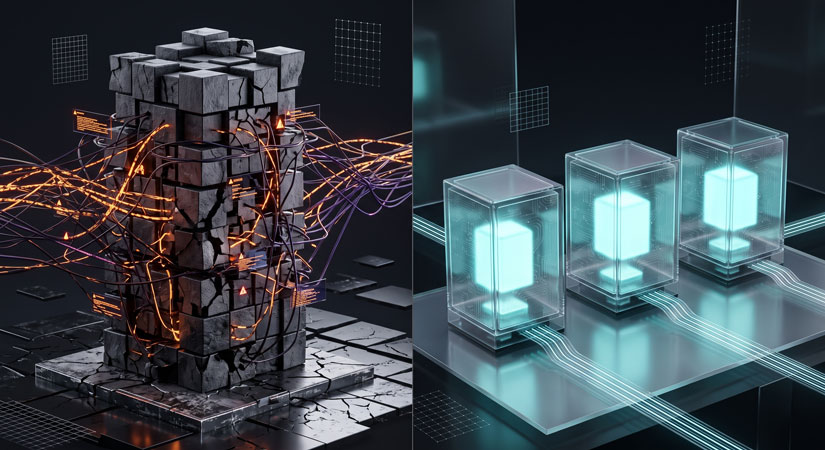
Monolithic application stacks expose every business function to shared system constraints. When a background task—such as bulk CSV processing, database indexing, or dynamic PDF generation—runs inside the main application thread, it consumes server memory and locks database tables needed for public page delivery.
Implementing domain and workload isolation segregates operational environments into dedicated server clusters:
Primary Content Delivery Layer (synctcollective.com): Serves static HTML, optimized Gutenberg blocks, and edge-cached assets via global Web Application Firewalls (WAF).
Application & Portal Tier (app.synctcollective.com): Houses dynamic custom post types, user authentication hooks, and bespoke client portal logic isolated within dedicated PHP worker pools.
API & Microservices Layer (api.synctcollective.com): Executes high-volume REST and GraphQL queries with dedicated rate-limiting and database connection pooling.
According to research published on Mozilla Developer Network on System Performance Architecture, isolating high-concurrency workloads prevents main-thread blocking and minimizes cascading system failures across distributed application tiers.
Benchmarking Architecture: Monolithic vs. Isolated Infrastructure
3. Mitigating Server Bottlenecks via Database Clustering
To maintain sub-second execution across high-volume platforms, server infrastructure must decouple database read and write operations. As explored in our technical breakdown on WordPress Database Schema & CPT Optimization, unindexed queries running on primary databases degrade both server response time (TTFB) and front-end interaction metrics.
By utilizing primary-replica database clustering (e.g., AWS Aurora or Google Cloud SQL for MySQL), write operations (such as user logons or form entries) hit the primary instance, while read queries are load-balanced across auto-scaling replica nodes. Technical benchmarks maintained by the MySQL 8.0 Reference Manual on Replication Topology demonstrate that distributing query loads across read replicas reduces database connection congestion by up to 80% during traffic surges.
4. Securing Edge Delivery and Cross-Origin Resource Sharing (CORS)
Domain isolation requires strict security enforcement at the edge layer to prevent unauthorized cross-origin data extraction. Combining infrastructure isolation with our recommended Enterprise WordPress Security Architecture & WAF Hardening guarantees that cross-domain API calls execute over authenticated, encrypted tunnels.
Key edge configuration protocols include:
Strict CORS Policy Headers: Whitelisting exact application origins while explicitly blocking wildcard (*) access on dynamic API endpoints.
Edge Token Verification: Validating JSON Web Tokens (JWT) or OAuth2 headers directly at the Cloudflare Enterprise/Fastly edge layer before proxying requests to origin containers.
Hardware-Isolated Workflows: Executing high-risk operations within isolated serverless microservices (e.g., AWS Lambda or Cloudflare Workers) to eliminate origin PHP engine exposure.
Furthermore, integrating edge processing ensures that front-end interactions maintain green performance metrics, building directly on the principles outlined in Mastering INP for Enterprise WordPress.
Building Scalable Enterprise Platforms
Architecting WordPress for high-availability enterprise environments requires moving beyond standard shared hosting paradigms to engineer modular, fault-tolerant infrastructure.
If your organization is scaling past single-server limitations, explore our Bespoke Systems, Web Applications & Client Portals services or review our Enterprise Speed Optimization & Technical SEO solutions to schedule a technical infrastructure assessment.
When the legacy platform is HubSpot, our HubSpot CMS migration architecture guide shows how to separate public content, CRM workflows, and application data during the cutover.
Frequently Asked Questions (FAQs)
Q: Why is domain isolation important for enterprise WordPress setups?
A: Domain isolation separates marketing websites from transactional portals and microservices. This prevents a high-traffic spike or code error in one area from taking down your entire corporate web infrastructure.
Q: Does separating environments onto subdomains hurt SEO?
A: No. Search engines like Google treat well-structured subdomains as logical extensions of your root domain when internal linking, canonical tags, and XML sitemaps are configured properly.
Q: How does infrastructure isolation improve site performance?
A: By offloading background processes, dynamic API calls, and heavy database operations to dedicated server resources, the primary origin server remains free to deliver cached static pages instantly.
Optimize Your Enterprise WordPress Architecture
Is your enterprise platform suffering from server locks, high latency, or single-point failure risks? Transitioning to a decoupled, domain-isolated architecture protects your operational uptime while maximizing page speed.
Contact the engineering team at Synct Collective to audit your platform infrastructure and implement an enterprise-grade delivery network.
Discuss Your Enterprise WordPress Infrastructure Architecture


