
Google’s transition from First Input Delay (FID) to Interaction to Next Paint (INP) marked a fundamental shift in how web performance is measured. Where FID only measured the initial delay when a user first attempted to interact with a page, INP evaluates overall page responsiveness by measuring the latency of all user interactions—clicks, taps, and keyboard inputs—throughout the entire lifecycle of a session.
For enterprise WordPress websites, passing INP presents a unique challenge. Heavy drag-and-drop page builders, unoptimized analytics tags, third-party chat widgets, and redundant JavaScript libraries routinely hijack the browser’s main thread. When a user clicks a navigation menu or triggers a filter while the main thread is busy processing heavy scripts, the browser cannot render the next frame, resulting in high input latency and failing Core Web Vitals scores.
Achieving a sub-200ms INP score requires moving beyond basic caching plugins to address the root causes of main-thread bottlenecking.
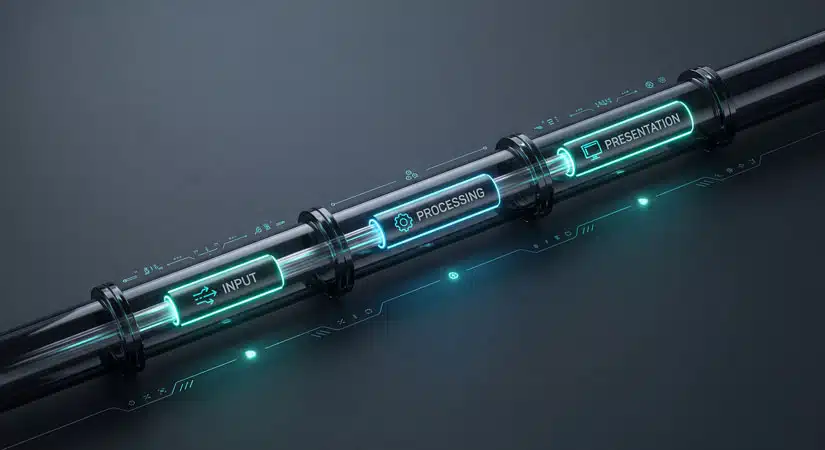
Understanding the Three Phases of INP
To optimize for INP, engineers must break down an interaction into its three core components:
Input Delay: The time between the user executing an action (e.g., clicking a button) and the browser beginning to process the event handlers.
Processing Time: The duration required to execute the JavaScript code associated with the event listener.
Presentation Delay: The time spent by the browser recalculating styles, updating the layout, and painting the new pixels to the screen.
If your website suffers from long tasks (tasks exceeding 50ms on the main thread), input delay spikes because the browser must finish the existing task before executing the interaction handler.
1. Eliminating Visual Builder JavaScript Overhead
The single largest contributor to poor INP on WordPress is reliance on legacy visual page builders like Elementor or Divi. These platforms inject complex nested <div> DOM structures and load global JavaScript bundles regardless of whether a page actually requires them.

When a page contains thousands of DOM elements exceeding W3C DOM tree benchmarks, any layout update forces the browser to re-evaluate style calculations across a massive tree.
The Solution: Replacing third-party visual page builders with High-Performance WordPress Engineering built on native Gutenberg blocks. Clean HTML structures reduce DOM depth by up to 70%, allowing the browser’s render engine to calculate style updates instantly without blocking the main thread.
2. Offloading and Yielding Long Tasks
When heavy JavaScript execution is unavoidable – such as complex client-side search filtering, interactive data tables, or dynamic modal popups—long tasks must be broken down to allow the browser to paint updates between operations.
Using requestAnimationFrame() or yielding control to the main thread via modern APIs like scheduler.yield() ensures that visual updates occur immediately after input:
// Example: Yielding execution back to the main thread for lower INP
async function handleComplexInteraction() {
// 1. Immediately update UI to give visual feedback
showLoadingSpinner();
// 2. Yield to allow the browser to paint the visual feedback
if (‘scheduler’ in window && ‘yield’ in window.scheduler) {
await window.scheduler.yield();
} else {
await new Promise(resolve => setTimeout(resolve, 0));
}
// 3. Perform heavy processing task
processLargeDataset();
}
3. Optimizing Database Queries and Dynamic Rendering
Main-thread execution is often delayed while waiting for dynamic server-side data to hydrate on the front end. When custom post types (CPTs) or complex meta fields are requested dynamically, unindexed database queries create server processing bottlenecks that cascade into client-side rendering delays.
As outlined in our analysis of WordPress Database Schema & CPT Optimization, structuring custom tables with indexed fields ensures that server responses deliver ready-to-render payloads immediately, lowering both server response times (TTFB) and downstream interaction delays.
4. Decoupled vs. Monolithic Rendering Bottlenecks
Many enterprise engineering teams attempt to solve performance bottlenecks by decoupling WordPress entirely. However, as explored in our guide on Headless WordPress vs. Native Gutenberg, dynamic JavaScript hydration in React or Next.js frontends often introduces severe main-thread blocking during initial page loads, leading to worse INP scores if client-side bundles are mismanaged.
Native WordPress architectures that combine server-side HTML output with lightweight, vanilla JavaScript micro-interactions provide the most reliable path to consistent 90+ mobile PageSpeed scores and green INP metrics.
5. Streamlining Third-Party Script Management
Third-party scripts (Google Tag Manager, HubSpot forms, Hotjar, live chat widgets) are major culprits of main-thread contention. To insulate your core user experience:
Defer non-critical scripts using Web Workers via libraries like Partytown, running tracking logic off the main thread entirely.
Lazy-load embedded assets (maps, interactive forms, video players) so they only load when scrolled into view or requested by the user.
Execute seamless platform shifts via Zero-Downtime CMS Platform Migrations when legacy platform constraints prevent clean script management.
Achieving Permanent Core Web Vitals Optimization
Passing Google’s INP threshold isn’t accomplished by installing a caching plugin; it requires clean front-end architecture, disciplined script management, and efficient DOM structures.
If your platform is suffering from sluggish user responsiveness, high bounce rates, or declining organic visibility due to failing Core Web Vitals, explore our Enterprise Speed Optimization & Technical SEO services to audit and resolve your main-thread performance bottlenecks.
Frequently Asked Questions (FAQs)
Q: What is Interaction to Next Paint (INP) and how does it differ from FID?
A: Interaction to Next Paint (INP) measures the visual responsiveness of a page by evaluating the latency of all user interactions (clicks, taps, keypresses) throughout a visit. First Input Delay (FID) only measured the response delay of the single first interaction.
Q: What is a good INP score for Google Core Web Vitals?
A: A good INP score is 200 milliseconds or less. Scores between 200ms and 500ms require improvement, while scores above 500ms trigger performance warnings inside Google Search Console.
Q: How do page builders affect INP on WordPress?
A: Heavy visual page builders inject deep DOM nesting, unoptimized CSS, and large global JavaScript bundles into every page. This bloat delays the browser’s main thread, preventing it from processing user inputs and painting visual updates quickly.
Optimize Your Enterprise WordPress Architecture
Failing Google’s INP threshold isn’t just a technical score issue—it directly degrades user experience, drops mobile conversion rates, and risks your search engine visibility. Resolving main-thread bottlenecks permanently requires moving beyond quick-fix caching plugins to engineer clean, native Gutenberg block structures and streamlined script execution.
Ready to eliminate page-builder bloat and secure sub-second performance across your platform? Contact the engineering team at Synct Collective to schedule a comprehensive technical audit and optimize your site for Core Web Vitals and AEO.

Dave Macdonald
Prior to founding Synct Collective, Dave was the founder of WP Tech Support, a global 24/7 maintenance and support agency that managed and secured over 600 WordPress sites worldwide. Having architected and maintained digital infrastructure at scale for hundreds of international site owners, his technical focus now centers on eliminating page-builder bloat, executing zero-downtime migrations, and optimizing server-level execution to deliver sub-second Core Web Vitals performance.
As an advocate for modern, future-proof web standards, Dave regularly writes on the intersection of native Gutenberg engineering, custom database architecture, structured JSON-LD schema design, and Answer Engine Optimization (AEO).